Defence audit has three crucial faults

5 February 2026 | Jennifer Parker

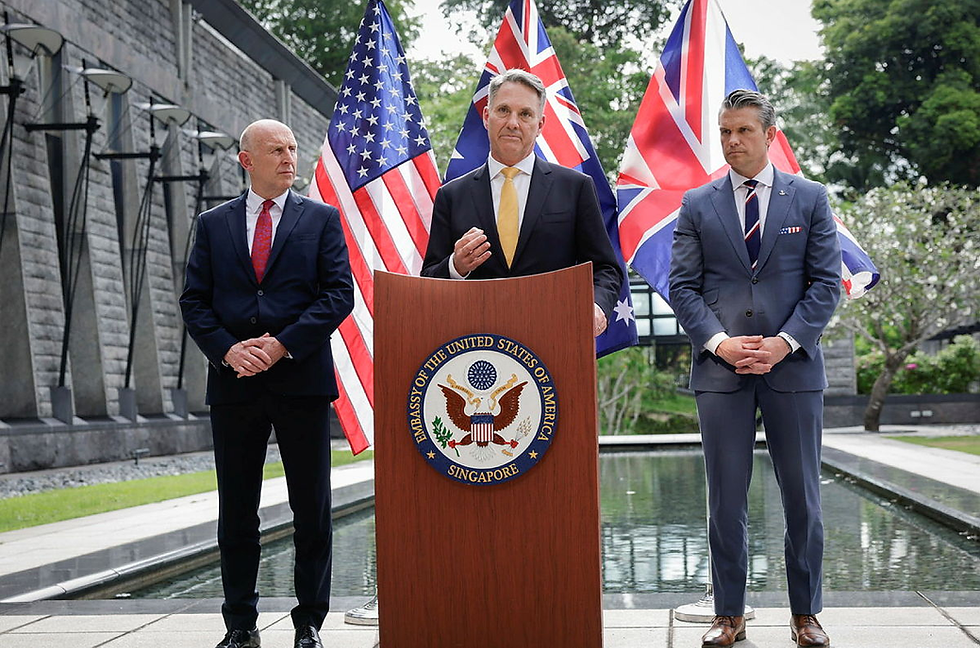
Image: Deputy Prime Minister and Minister for Defence the Hon. Richard Marles MP and Assistant Minister for Defence, the Hon Peter Khalil MP with Minister for Finance Senator the Hon Katy Gallagher speaking at a press conference at Parliament House in Canberra. (Kym Smith / Defence Images)
The release of the Defence Estate Audit marks another milestone in the Albanese government’s effort to reshape Australia’s defence posture. It seeks to rationalise the commonwealth’s largest infrastructure portfolio and is a long-overdue step in that reform agenda. Much of its logic is sound. But taken as a whole, the review entrenches three strategic mistakes that risk weakening our defence preparedness.
Much of the attention will rightly focus on the 67 Defence-owned sites slated for divestment or partial divestment, the sustainment funding the government expects to recoup, and future capital returns from property sales. History suggests, however, that some of these returns may take decades to materialise. There will also be reflection on the history of the bases being lost. While the government is correct that history should not determine the structure of the defence estate, these decisions will land hard for many who have served. Service is not easily reduced to financial incentives.
The government is right to make difficult decisions about the estate. The challenge is that decisions about Australia’s defence posture, which should drive estate planning, depend on a clear understanding of how the force would mobilise in a crisis or conflict, and what role the reserve force is expected to play. Neither question has yet been resolved.
Reducing the defence estate without clarity on mobilisation or reserve force structure therefore carries strategic risk.
The estate review was driven by the Defence Strategic Review and its call for an enterprise-wide audit of Defence estate and infrastructure. This was largely because of the cost of sustaining ageing and underused infrastructure.
However, the original terms of reference for the Defence Strategic Review also required it to examine mobilisation in the event of a crisis, including Defence’s ability to mobilise at scale for the defence of Australia. Defence leadership warned publicly in June 2025 that Australia should be preparing for this. Yet the unclassified public version of the Defence Strategic Review did not outline a plan to address the challenge. Mobilising at scale requires training facilities, space and locations accessible to the public – requirements that need to be understood before undertaking what the government has described as the most significant change to the Defence estate in Australia’s history.
The Defence Strategic Review also recommended a comprehensive strategic review of the Australian Defence Force reserves. This was necessary because the reserve structures of all three services have changed fundamentally since the last time Australia prepared to fight from its own territory. In the navy, for example, there is very limited recruitment of civilians directly from the street. There are serious questions about how the Naval Reserve could be employed in a crisis beyond reinforcing administrative functions.
The original purpose of the Naval Reserve was to retain and mobilise a mariner base drawn from the civilian population. It no longer performs this function. The 2024 Strategic Review of the Australian Defence Force Reserves was not, in practice, a strategic review, failing to address the strategic contribution of the reserves.
Any genuine review would require restructuring across all three services reserve forces, with clear implications for the Defence estate, particularly for facilities located close to major population centres. The absence of this work before the estate audit calls into question whether the current estate is suited to the force structure Australia needs, not what it has.
The final, and perhaps most fundamental, of the three strategic issues is the review’s emphasis on integration. Since the 2023 Defence Strategic Review, integration has become a catch-all concept used to describe the ability of the services to operate seamlessly together, but in practice frequently pursued through decisions that drive centralisation and diminish the role and identity of the individual services.
This is reflected in two recommendations contained in the Defence Estate Review. The first proposes further due diligence on consolidating all domain command headquarters into a single location to accelerate the transition to an integrated force. The second recommends renaming bases in a way that removes service identity. Together, these measures go to the heart of how integration is being interpreted and implemented.
The army, navy and air force are not interchangeable. They perform distinct operational functions and play different roles in supporting mobilisation of civilian capability. While joint operations will remain central to Australia’s future defence, history offers a clear warning against excessive centralisation.
The Defence Estate Review is welcome and important. But without first resolving how Australia would mobilise in a crisis, or what reserve force role and structure is required, it is impossible to determine the defence posture and estate Australia actually requires. These questions are urgent.
The continued erosion of the services’ authority through overcentralisation risks introducing a critical vulnerability in crisis or conflict. That is a risk Australia should not bake into its defence structure during the most testing strategic circumstances we have faced in generations.